On the evening of November 1, 2026, Ukrainians began receiving messages from the “Air Alarm” app: radiation danger, chemical attack, street fighting in Kyiv. And the final blow to the nervous system — “nuclear alarm” mentioning the Russian “Oreshnik.” All this looked like regular warnings on the phone. Only there was no such nuclear attack.
author Anton Pshedynsky
At NANews, we are used to analyzing Russian threats by words, dates, and specific consequences. But here someone decided to shorten the distance between the threat and the person to the sound of a push notification. You don’t even need to launch a missile to make people look for the nearest basement.
From “Oreshnik” to street fighting — fifteen minutes of absurdity
According to Ukrainian journalists and the єTrivoga service, the first fake alerts appeared around 22:47–22:49 Kyiv time. False danger signals flashed on the map. Kyiv residents were informed about radiation, chemical contamination, and street fighting. Another message, already in Russian, kindly warned that a nuclear alarm would be across the country: don’t worry, “Oreshnik” is coming.
Agree, a wonderful “don’t worry.” Especially if you’re driving, with children nearby, or elderly parents at home. There’s a story about a woman who almost lost control of her car upon hearing such a warning on the highway. This is a personal testimony from social media, not a confirmed report of an accident. And how many people were truly scared to the point of chest pain, no one has counted yet. We won’t invent heart attack numbers. People already have no nerves left.
At 23:02, the Air Force of the Armed Forces of Ukraine reported a possible hostile interference and assured: there is no radiation threat. Air Force representative Yuriy Ignat clarified that the military did not announce a chemical attack or street fighting. The Ukrainian Center for Strategic Communications linked the cyberattack to Russia, although there is no public technical evidence identifying the perpetrators yet.
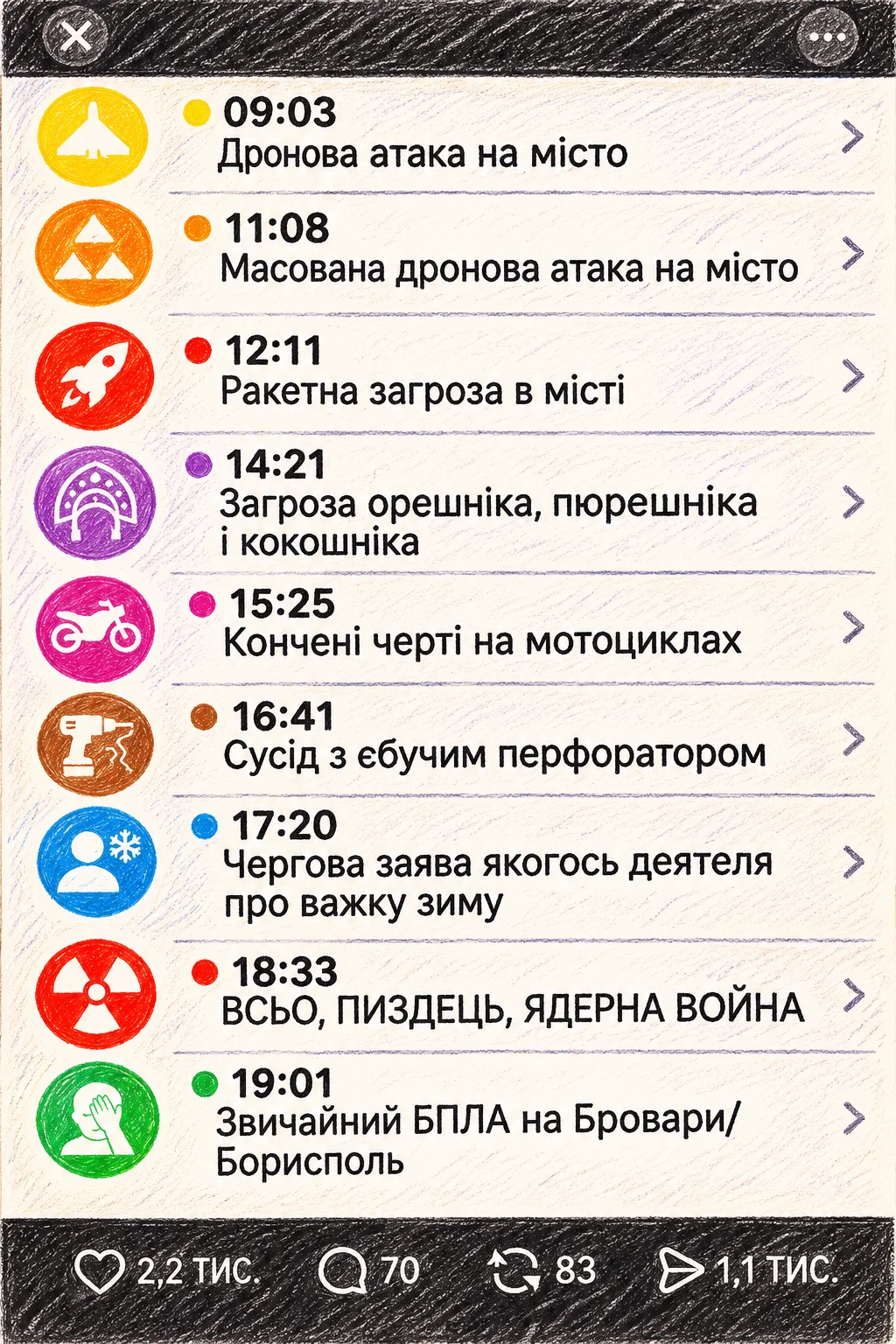
Later, developers confirmed unauthorized interference, temporarily disabled notifications, and began restoring the service. On the night of November 2, push notifications and danger levels on the map resumed; the display of air targets remained disabled.
This is about the app, not the simultaneous hacking of all street sirens in Ukraine. State warning channels continued to operate. Developers also stated that the app does not store users’ personal data. How exactly the attackers gained access has not been publicly explained yet.
The nuclear alarm ended — “Nova Poshta” began
By morning, the Ukrainian internet did what it usually does with a nightmare when it hasn’t turned into a tragedy. It started mocking it. In Threads, they discussed whether “Nova Poshta” would deliver parcels during a nuclear attack and street fighting. They recalled Kyiv Mayor Vitali Klitschko: if street fighting started in the city, it’s good that the mayor is a former boxing champion. They suggested surviving the chemical threat with expensive Baccarat perfumes. Then came dinosaurs, zombies, and other candidates for the next push.
“Nova Poshta,” by the way, is not just a convenient joke hero: it is one of the largest delivery operators in Ukraine, continuing to work during the war. NANews recently reported how the company explained its participation in protecting its facilities from Russian drones. In a country where parcel delivery and protection from “Shaheds” already coexist, a joke about delivery during a nuclear alarm sounds almost mundane.
And laughing at a person frightened by a fake alarm is a completely different story. People in Ukraine have been hearing real sirens for years. Missiles and drones really fly to their cities. The Kremlin threatened Ukraine with “Oreshnik” even before this evening. Therefore, the unknown hacker pressed a very specific, long-inflamed button.
And then there was a continuation. On the night of November 2, the Russian Ministry of Emergency Situations reported that its mobile app was also hacked. Users in Russia received fake messages about nuclear warheads, three-week food supplies, and the need to hide in basements. The Russian department acknowledged the cyberattack but stated that the overall warning system was not affected. Who exactly carried out both attacks and whether they are connected is not reliably known. Attributing this story to a specific group just because you want to would be another fake.
Israelis will understand why there’s no time for laughter here
We have our own Home Front Command app — Pikud Ha-Oref (פיקוד העורף). In May 2026, the IDF updated its system of colors, icons, and sounds so that the type of danger could be recognized faster. An Israeli waking up at night from a rocket notification understands perfectly: this is not an app for entertainment. Such signals are reacted to before you have time to think.
The Ukrainian hack does not prove any vulnerability of the Israeli system. But it shows the price of trust. If the phone once lied about a nuclear attack, someone might take the next real signal as another prank. Or, conversely, people might start acting in panic on a false message.
In the evening, there were “Oreshnik,” chemical attack, and street fighting on the phones. In the morning — dinosaurs, zombies, and jokes about parcels. And then Ukrainians will have to turn on the same “Air Alarm” again and hope that next time it will report exactly what is happening.