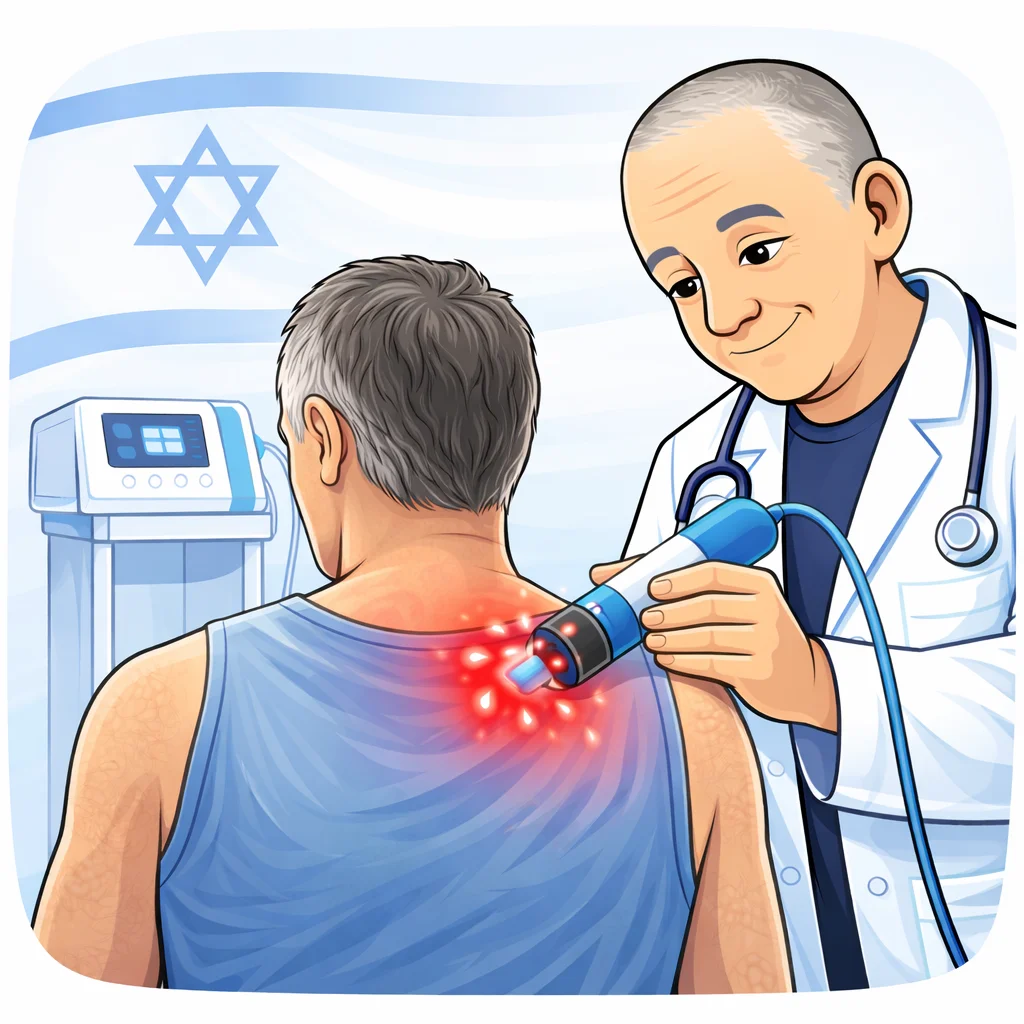
Shoulder pain rarely starts suddenly. In most cases, it develops gradually — first as mild discomfort when lifting the arm, then as stiffness when putting on a jacket, and eventually as persistent pain that limits everyday movement. At a certain point, the shoulder no longer feels reliable. Simple actions require caution, and movements that once felt automatic become controlled and restrained.
The shoulder is one of the most mobile joints in the human body, which also makes it particularly vulnerable. Tendons, muscles, ligaments, and the joint capsule work together in a complex system. Repetitive strain, physical workload, old injuries, or age-related changes can disrupt this balance, leading to inflammation, pain, and restricted motion. Many people continue their daily routine despite early warning signs, until the problem begins to interfere with work, driving, or sleep.
At that stage, patients often start looking for treatment options that do not involve injections or surgery. This is where extracorporeal shockwave therapy is increasingly considered as a method of support for shoulder pain and limited mobility.
When shoulder pain becomes a daily limitation
Pain in the shoulder often affects more than just physical comfort. It interferes with sleep, especially when lying on the affected side. It can radiate toward the neck or upper arm. In some cases, people experience weakness or a sensation that the joint is “blocked.” Over time, reduced movement becomes a habit, and stiffness develops even further.
This pattern is common in chronic shoulder conditions. The longer the joint remains underused due to pain, the more difficult it becomes to restore full function. Addressing the issue early and supporting tissue recovery is crucial.
Patients searching for structured, non-invasive approaches often turn to specialized clinics and information resources such as
https://uvt.nikk.co.il/
to understand how shockwave therapy is used in musculoskeletal pain management.
Understanding why shoulder pain persists
One of the main reasons shoulder pain does not resolve on its own is impaired circulation and delayed tissue repair. Tendons and muscles affected by chronic overload may develop areas of reduced blood supply. As a result, natural healing slows down, inflammation persists, and pain signals remain active.
Standard approaches such as rest or pain medication may temporarily reduce symptoms, but they do not address the underlying tissue condition. Once physical activity resumes, discomfort often returns. Over time, movement patterns adapt to avoid pain, which further limits range of motion.
Extracorporeal shockwave therapy is applied in such cases to stimulate local circulation and activate biological repair mechanisms. Additional technical information about where and how shockwave therapy is used can be found here:
https://uvt.nikk.co.il/en/where-shockwave/
How ESWT works for shoulder pain
ESWT uses acoustic pressure waves directed at the affected area. These waves do not damage tissue. Instead, they create controlled mechanical stimulation that encourages the body’s natural recovery processes. In shoulder conditions, this can be particularly valuable due to the complex tendon structures involved.
The therapy is designed to:
- improve microcirculation in the affected tissues
- reduce chronic muscle tension
- support tendon healing
- decrease pain sensitivity
- gradually restore mobility
The procedure does not involve injections or surgery and typically does not require downtime, making it a practical option for patients who want to remain active during treatment.
What patients typically experience
During treatment, sensations vary depending on the individual and the condition being addressed. Most patients describe the feeling as noticeable but tolerable. After a session, temporary sensitivity or soreness may occur and usually resolves within a short period.
Improvements tend to develop gradually. Patients often report that movement becomes easier before pain fully subsides. This functional improvement is an important indicator that tissue response is progressing.
When ESWT may be considered
Shockwave therapy for shoulder pain is often discussed when:
- pain persists for weeks or months
- range of motion is limited
- physical activity or work aggravates symptoms
- previous conservative methods have not provided lasting relief
Timely evaluation allows for more effective intervention and reduces the risk of long-term stiffness.
Treatment availability and location
The David Sendler Pain Treatment Clinic provides shockwave therapy services across multiple regions in Israel, making access convenient for patients without extensive travel.
Patient appointments are available in:
Haifa, Krayot, Akko, Nahariya, Afula, Yokneam, Petah Tikva, Netanya, Hadera, Kfar Saba. Israel.
A home visit for treatment demonstration is available by prior arrangement, which can be helpful for patients with significant mobility limitations.
More details about the clinic’s work in Haifa can be found here:
https://uvt.nikk.co.il/klinika-boli-v-hajfe/
(Page in Russian)
Clinic hours and contact
Clinic operating hours are as follows:
Sunday–Thursday: 10:00–19:00
Friday and pre-holiday days: 9:00–14:00
Saturday: closed
Online contact through the clinic website is available 24/7.
Why patients choose non-invasive approaches
Many patients prefer to avoid injections, surgery, or long-term medication whenever possible. ESWT is often viewed as a balanced approach — offering active treatment without aggressive intervention.
The same method is used for other chronic musculoskeletal conditions. For example, its application in heel pain management is described in detail here:
https://uvt.nikk.co.il/en/help-with-heel-pain-when-walking-eswt/
This demonstrates the broader clinical use of shockwave therapy for tendon- and load-related pain.
Conclusion
Shoulder pain and limited range of motion are not simply signs of aging or issues that should be ignored. They are indicators that tissue recovery needs support. Modern, non-invasive methods such as extracorporeal shockwave therapy provide an opportunity to address the underlying problem rather than only suppress symptoms.
With proper assessment and structured treatment, restoring shoulder function and improving quality of life becomes a realistic goal rather than a distant expectation.