The documentary series Ilya Axelrod “Bridges of Hope”, created for Channel 9, was initially constructed as a journey through the nervous system of the country. Nine episodes. Nine attempts to understand what holds together a society that has experienced the greatest blow in its history.
Not staff maps.
Not briefings.
People who suddenly began to do more than expected of them.
Here is the entire series – “Bridges of Hope” 9 episodes:
“The large-scale documentary project of Channel 9 «Bridges of Hope». This is not a chronicle of military actions. It is a chronicle of the human spirit. Since October 7, 2023, the life of Israel has changed forever. In this 9-episode series, we will embark on a journey across the country — from the shelled North to the wounded South. We will show the stories of doctors, volunteers, soldiers, and civilians who, in the moment of greatest tragedy, found the strength not just to survive, but to become a support for each other.”
By the finale, in the 9-1 episode titled “This is Why Israel Always Wins” | Bridges of Hope – final episode, the author leads the viewer to those who already had experience in civil mobilization:
“In the final episode, we will tell the stories of people and organizations from different parts of Israeli society. Left and right, residents of the noisy center and distant periphery, who in the country’s difficult hour left all disputes behind and began to help their country, showing its most beautiful sides.
📌 Heroes of the episode:
Professor Albert Penkhasov, rector of Ariel University, directed all efforts to help students and their families. Lecturers conducted Zoom lectures for reservist students who were in Gaza.
Representatives of the movement «Brothers in Arms» turned the protest infrastructure into a large-scale volunteer headquarters engaged in evacuation, logistics, and assistance to the residents of the south.
Elena Mrost and Rabbi Eli Talberg created a support center for the families of the deceased in Karmiel, helping them cope with loss and not be left alone with their pain.
Anna Zharova and the organization «Israeli Friends of Ukraine» coordinated the evacuation of Sderot residents, food delivery, and support for soldiers.
Nine episodes ago, we set out to find the answer to the main question: what holds us together despite all trials and disagreements?
We sincerely hope that through the pain you were able to see the main thing — our resilience, our love, and hope”.
Thus, in the frame appear Israeli Friends of Ukraine and their co-founder Anna Zharova.
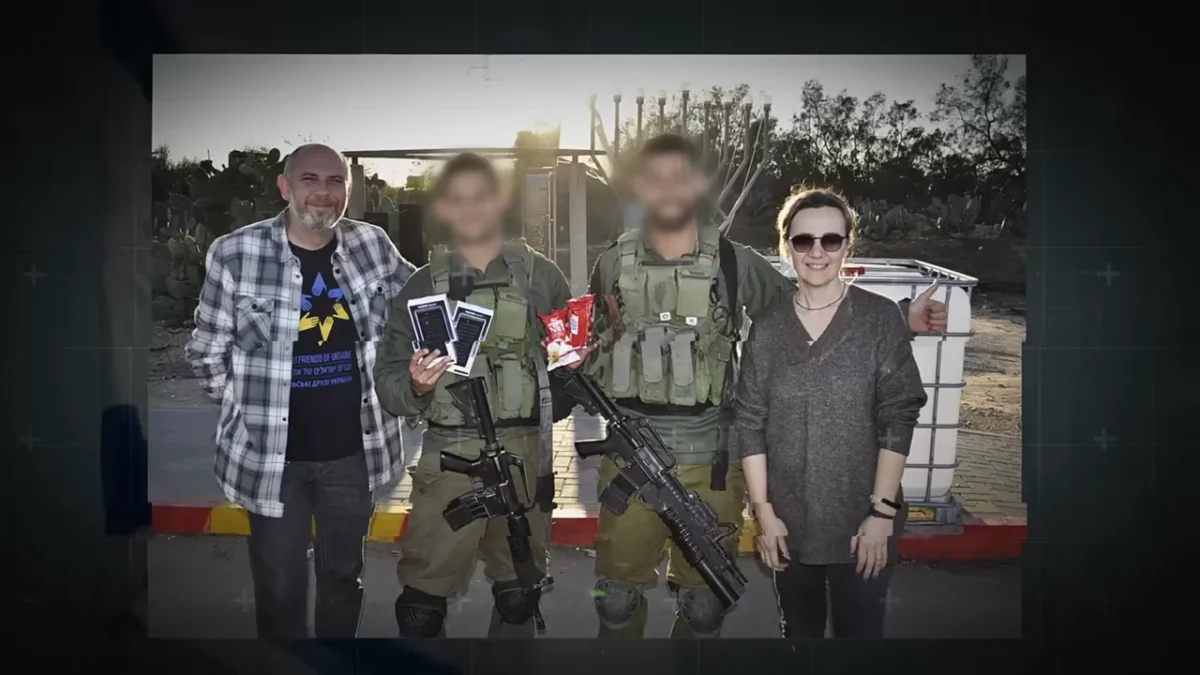
Experience brought from another catastrophe
Before the Israeli war, this team worked for many years with the Ukrainian direction. Initially, helping those affected after 2014. Then — large-scale support programs after 2022: humanitarian cargo, escorting the wounded, finding housing, coordination between donors and volunteers.
This was not a spontaneous initiative.
This was a well-established system.
On October 7, it became clear that such systems were needed within the country.
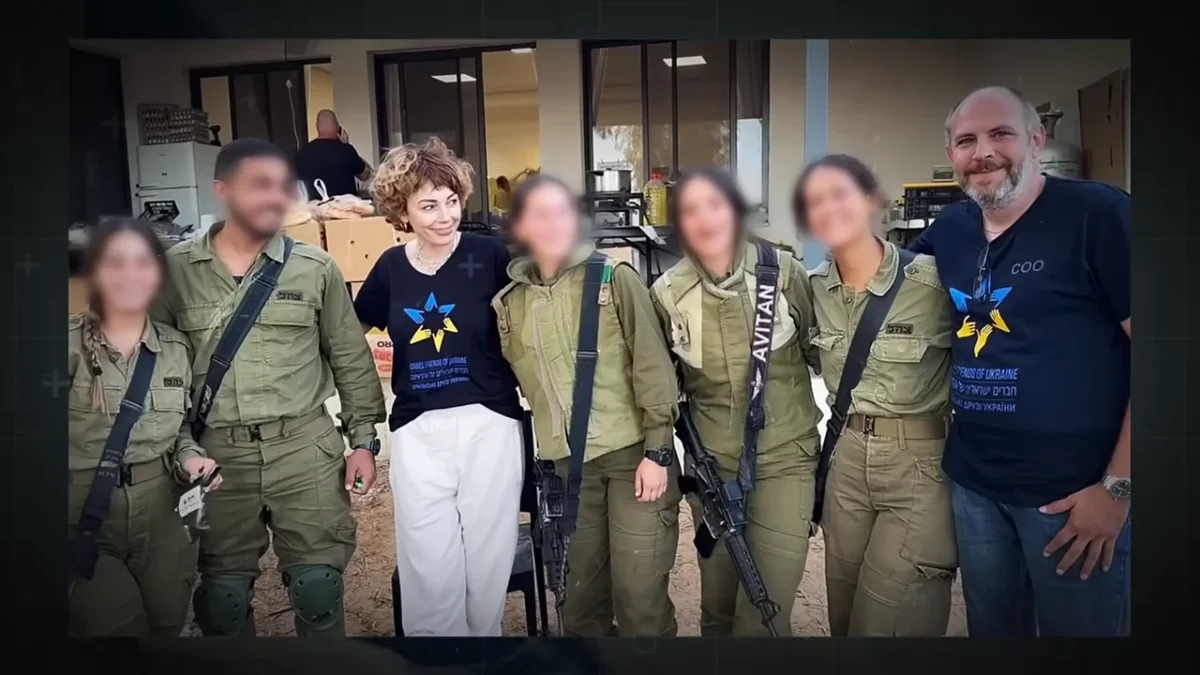
Phones, lists, drivers, understanding how to act when official structures are overloaded. Not theory. Practice.
In the film, this is stated calmly, without pathos: people already had the skill of working in chaos. Therefore, they could start immediately.
Where the finale is filmed and why there
Haifa as a working point, not a decoration
The interview was recorded at a volunteer center for helping Ukrainian refugees in Haifa. The logic of the choice is clear. It was here that a network accustomed to round-the-clock workload was formed over the years.
There was no need to invent a structure.
It existed.
Later, Zharova will formulate the meaning of the filming as follows:
«For us, this is more than an interview. It is a conversation about choice, responsibility, and humanity».
The phrase is short. But in it — the entire explanation of why this line became part of the final episode.
Those who are off-screen
Television is limited by time. However, Zharova emphasizes the names of those who worked nearby: Ella Storm, Vyacheslav Feldman, Sashenka Zhuravel.
Her position is straightforward:
«These are the people without whom this story would not have been heard».
For documentarians, this is an important emphasis. The project is built on the recognition of invisible work — logistics, phones, distribution, family support.
Without this, nothing works.
What the organization did in the first weeks of the war
Cars, routes, families
From the first hours, it became clear: a huge number of people needed to be evacuated, accommodated, fed. Often it was about the elderly, new immigrants, those who were not oriented in the system.
«Israeli Friends of Ukraine» already had databases of drivers and volunteers.
The mechanism started automatically.
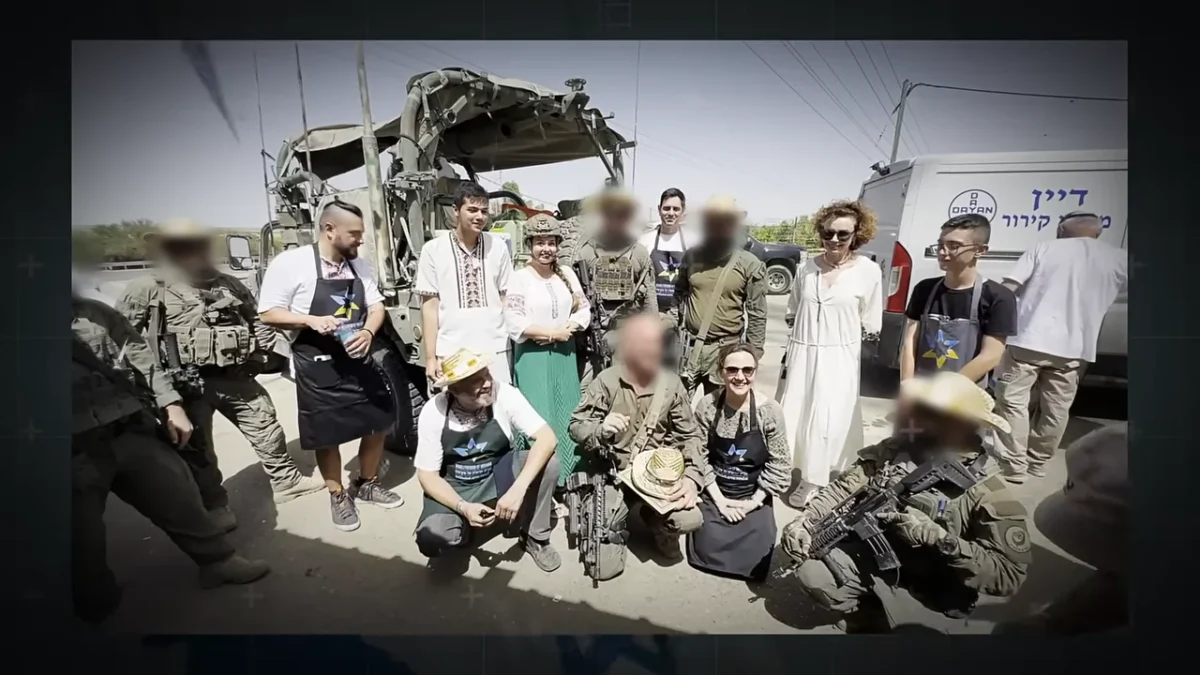
Flights to the south were formed. Apartments and houses were sought in the north and center. Temporary shelters appeared. People were distributed literally by hand, through acquaintances, social networks, personal calls.
Zharova emphasizes:
«Our main task was to help those who were not visible and not heard».
This is the key characteristic of all work — the focus on those who are easily lost between reports and numbers.
Food for soldiers and human contact
When restaurants began cooking for army units, delivery was needed. Volunteers took on the routing. Cars went to bases daily.
The work looked routine.
But it was in this routine that resilience lay.
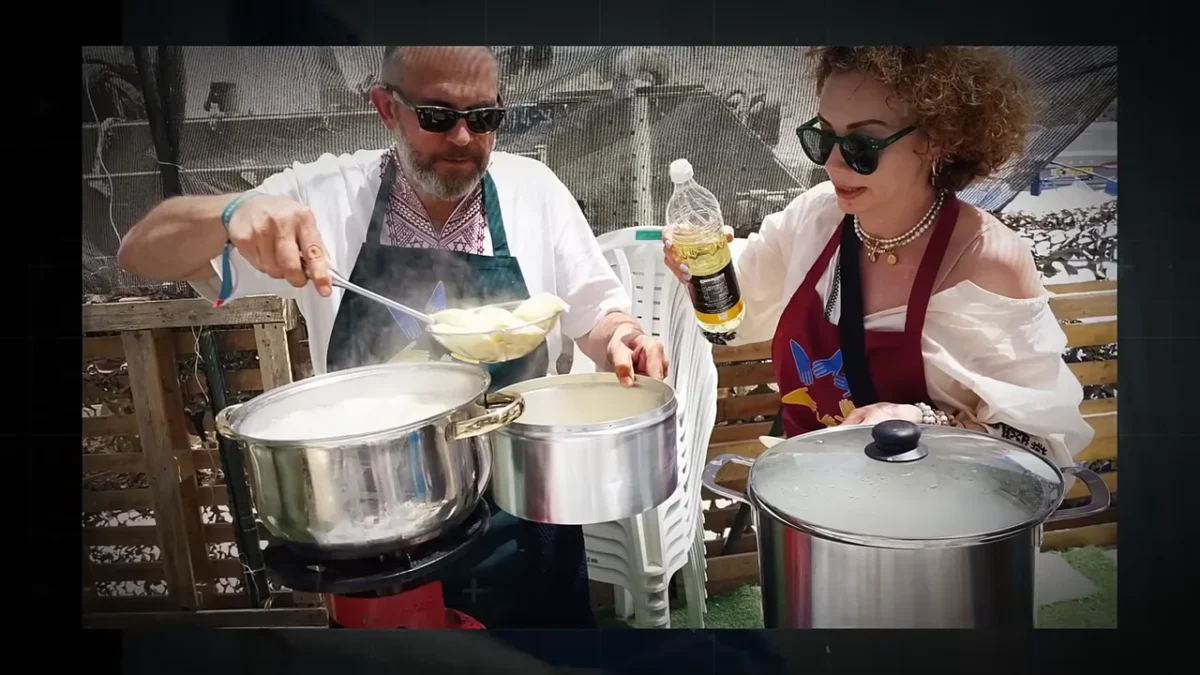
The story about ice cream
One of the episodes that came into discussion after the release of the series was Ukrainian ice cream. It was brought along with other products. Soldiers waited for it.
If the boxes arrived without it, they asked.
This is not a joke. This is an indicator of how important simple signs of normal life are to people. Sweet, familiar, human.
This is how morale works.
It is such details that the director leaves in the finale — they speak louder than analytics.
Why this line is important for understanding the whole picture
By the time the viewer reaches the last episode, they have already seen doctors, reservists, rabbis, volunteers in different parts of the country. The question arises: what do they have in common?
The answer gradually forms — the willingness to take responsibility without waiting for orders.
Zharova’s story fits perfectly into this formula. A community accustomed to helping outside of Israel, in a critical moment, turns its efforts inward.
Humanitarian competence has no national borders. It simply changes the direction of application.
And at this point in the narrative, the conclusion naturally sounds, which was previously formulated by the editorial office of NAnews — News of Israel | Nikk.Agency: society survives thanks to horizontal connections faster than any bureaucracy.
Gratitude and memory fixation
Zharova separately thanks KAMANDA Productions Ltd for the opportunity to tell this story. For the participants, it is important not only to do the work but also to preserve it in public memory.
Otherwise, in a few years, only dry formulations will remain.
And the main thing will disappear — the feeling of a shoulder nearby.
What remains after the credits
The finale does not offer simple recipes for the future. It records the fact: in the most difficult weeks, thousands of people in Israel acted as if there was no other way.
Someone opened their home.
Someone got behind the wheel.
Someone took on someone else’s pain as their task.
The line of «Israeli Friends of Ukraine» shows that solidarity can be a learned skill. It can be developed. It can be activated.
And when it is activated, the country has a chance to go through a catastrophe without losing itself.
That is why this story stands at the end.
It is not about the past. It is about the mechanism of survival.
…
…
…